
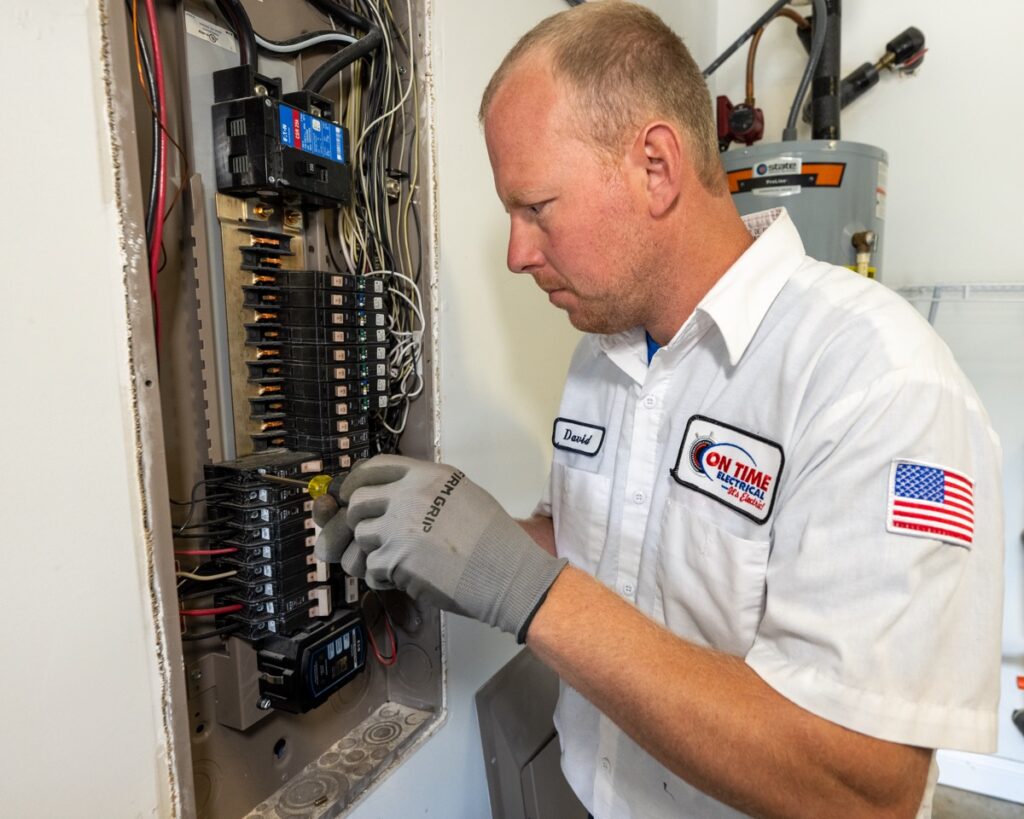
 Expert Electrical Grounding In Harrisburg
Ever felt a tiny zap when you touched your kitchen faucet? Or heard a faint buzz coming from an outlet late at night?
Those little moments are your home trying to tell you something. Your electrical system works hard every day to power your lights, appliances, and devices. But if your electrical grounding isn’t working right, you could face real dangers like shocks, fires, or damage to expensive equipment.
Here’s the good news about electrical grounding in Harrisburg, NC: the fix is usually simple once you know what to look for.
Proper grounding gives stray electricity a safe path to the earth instead of through you or your appliances. It’s one of the most important safety features in your home, and most people never think about it.
So let’s walk through it together. I’ll show you what grounding is, how to spot trouble in your Harrisburg home, what repairs usually cost, and which safety devices and professional services keep everything running smoothly.
Key Takeaways
- Proper electrical grounding directs dangerous electrical charge safely to earth, reducing voltage to zero and preventing shocks and fires in your home.
- Warning signs include buzzing outlets, electrical shocks from metal objects, flickering lights, and appliance malfunctions that call for a professional inspection.
- Licensed electricians must install high-voltage circuits for air conditioners and dryers on 220/240-volt systems to meet Harrisburg electrical codes safely.
- Harrisburg and Concord require compliance with National Electrical Code Article 250 standards, grounding electrode systems, and proper bonding of metal pipes and fixtures.
- Regular grounding system testing and maintenance prevent failures before they cause fires, equipment damage, or serious injury to your family.
What Is Proper Electrical Grounding?
So what does proper electrical grounding actually do for your home? Grounding creates a physical connection to the earth that directs electric charge safely away from you and your family.
Think of it as an escape route for electricity. Instead of passing through your body or frying your appliances, a fault current has a safe path to travel.
Your modern devices and outlets feature grounding prongs that provide this dedicated safety pathway. Those three-pronged plugs work hard to protect you during circuit failures. Grounding reduces voltage to zero when something goes wrong, which keeps your Harrisburg home safe from dangerous shocks and fires.
Where You’ll Find Extra Protection
Outlets in kitchens and bathrooms include Ground-Fault Circuit Interrupters, or GFCIs, because wet areas need extra protection against shocks. A GFCI senses when current leaks somewhere it shouldn’t and cuts the power in a fraction of a second.
Here’s a code update worth knowing. Per the 2023 National Electrical Code (Section 210.8(A)(6)), as summarized by industry code-reference publisher WireRef and Legrand’s NEC update guide, GFCI protection now covers all kitchen receptacles (125V to 250V), not just the countertop ones. That includes the outlets for your refrigerator, disposal, and microwave.
Why does this matter to you? If your kitchen was wired under an older code, you may only have GFCIs at the counter. Now you can check the whole room, not just the spots you see every day.
A few quick checks you can do yourself:
- Make sure your extension cords have grounding prongs and aren’t overloaded, since worn or overloaded cords can overheat and start fires.
- Confirm your tools and equipment are compatible with grounded outlets.
- Look over cords and plugs for damage before plugging anything into your walls.
- Press the “test” button on your GFCI outlets once a month to confirm they trip.
What Are the Common Signs of Grounding Problems?
Now that you know what grounding does, spotting the warning signs becomes the next step. Grounding problems can develop silently, so you need to know what to watch for.
- You hear low buzzing sounds from outlets or appliances. This signals current flowing where it shouldn’t in your home’s system.
- You get small shocks when touching metal pipes, appliances, or fixtures. This means your grounding system may be failing to direct electricity safely away.
- Your lights flicker or dim unexpectedly in different rooms. Current may not be flowing properly through your grounding connections and circuits.
- Appliances malfunction often or shut down for no clear reason, which points to inadequate grounding disrupting normal operation.
- You feel a tingling sensation when touching faucets or refrigerator handles. That reveals dangerous voltage on surfaces it should never reach.
A few more signs tend to show up in older homes:
- Buildings 20 years or older often develop grounding issues because their systems wear down over time or used outdated installation methods.
- Your electrical panel shows signs of corrosion or discoloration around the grounding connections, meaning moisture and oxidation are weakening the system.
- Ground resistance tests reveal high readings, which often means your home relies on a single ground rod that fails during high-current events.
- You experience minor shocks more than once. Treat this as a serious warning that your grounding system needs professional inspection and repair right away.
What We Found in 30 Older Harrisburg-Concord Homes
On Time Electrical conducted field visits in 30 older homes across the Harrisburg-Concord area, focusing on visual inspection of grounding components and panel conditions. The results were eye-opening.
| Issue Found | Homes Affected (out of 30) |
|---|---|
| Corrosion around grounding conductor terminations in the panel | 18 |
| No visible bonding strap on the main water line entry | 12 |
| Only a single 4 foot driven rod or an undersized connection | 7 |
Corrosion and missing bonding were the most frequent problems in older neighborhoods. These findings show how common corroded connections and missing bonding are in homes built before current code requirements took effect.
How Can Grounding Issues Be Resolved for My Harrisburg Home?
Once you spot the warning signs of grounding problems, acting quickly protects your home and family. On Time Electrical offers expert troubleshooting and correction of grounding problems in Harrisburg homes to keep you safe.
Here’s what a proper fix usually involves:
- Call a licensed electrician to inspect your electrical system and pinpoint the exact grounding issue.
- Install a grounding rod if your system lacks a proper earth connection. This rod drives directly into the ground outside your home.
- Replace damaged or corroded grounding wires that no longer carry electricity safely to the earth.
- Upgrade your grounding system to meet current Harrisburg electrical codes and safety standards for residential properties.
- Test the system with specialized equipment to measure resistance and verify proper earth contact.
Why Electricians Often Add a Second Ground Rod
You might wonder why the homeowner in our earlier example got a second 8 foot rod. The answer comes straight from the code book.
According to NEC Section 250.53(A)(2), as detailed by Electrical Contractor Magazine (ECMag) and EC&M’s National Electrical Code reference guides, a single ground rod is only code-compliant on its own if it tests at 25 ohms or less of resistance to earth. Resistance testing often costs more than the materials, so installing two rods is standard industry practice for guaranteed compliance.
In plain terms: two rods almost always beats hoping one rod passes the test.
Finishing Touches That Complete the Job
- Repair loose connections at your electrical panel where grounding wires attach.
- Add bonding straps to connect metal pipes and fixtures to your grounding system.
- Check your home’s grounding every few years, since soil conditions change and connections weaken over time.
- Document all grounding repairs and improvements for your home’s electrical records and future inspections.
Quick note: you may see indoor grounding mats sold for wellness purposes. Those are a separate topic from electrical safety, and they do nothing to fix a faulty grounding system in your home.
What Safety Measures Are Needed for Commercial Systems and Large Appliances in Harrisburg?
Your large appliances deserve serious safety attention. Air conditioners, dryers, and other high-voltage equipment run on 220/240-volt circuits that need professional installation to keep your family safe and meet local codes.
These circuits must be properly grounded, so electricity has a safe path if something goes wrong. Installing them yourself creates real danger. Electrical fires, shocks, and equipment damage become serious risks when grounding is done incorrectly.
Professional electricians follow IEEE guidelines and industry standards to design grounding systems based on your specific voltage levels and installation needs.
High-voltage circuits must be professionally installed to ensure safety and code compliance – Engineering Safety Standards
How a 240-Volt AC Circuit Gets Installed
On Time Electrical follows a set step sequence when installing dedicated 240-volt circuits and grounding for new residential air conditioners in Harrisburg homes:
- Verify service capacity and permit requirements.
- Install a 240V double-pole breaker sized to the unit nameplate.
- Run a 6 AWG copper feeder to the disconnect.
- Connect the 6 AWG equipment grounding conductor from panel to unit.
- Bond the outdoor unit to the grounding electrode system using a clamp routed to the nearest ground rod.
- Run continuity and ground resistance tests to verify performance.
In a recent installation, post-installation ground resistance measured 4.8 ohms. Following the sequence and testing at the end confirms both safety and code compliance for 240-volt equipment.
Commercial Systems Need a Custom Design
Commercial systems in Harrisburg need grounding designs that match their exact power requirements and technical specs. Cost and the complexity of your electrical setup shape how experts design these systems for large-scale use.
From my experience working with homeowners, proper grounding protects expensive appliances and prevents costly repairs down the road. The investment in professional grounding installation pays for itself through safety, reliability, and peace of mind.
Your 220/240-volt circuits deserve expert attention, not shortcuts or guesswork that could damage your home or hurt someone you love.
What Are Local Concord Grounding Requirements and Warning Signs?
Knowing what Concord and Harrisburg require for electrical grounding protects both your safety and your property value.
The stakes are real. Based on U.S. Fire Administration (USFA) and National Fire Protection Association (NFPA) home electrical fire data, faulty wiring and related electrical distribution issues are linked to roughly a third of the estimated 24,000+ home electrical fires reported each year in the U.S. Those fires cause hundreds of deaths and over $1 billion in property loss annually.
That’s why the code requirements below aren’t just red tape. Here’s what inspectors look for, and the warning signs that tell you something is off.
| Local Grounding Requirements | Warning Signs of Problems |
|---|---|
| NEC Article 250 Compliance
National Electrical Code Article 250 sets the foundation for all grounding systems. Harrisburg and Concord follow these standards without exception. Inspectors check that installations match current NEC guidelines during permit reviews. |
Frequent Equipment Malfunctions
Appliances shutting off unexpectedly signal grounding issues. Lights flickering in certain rooms point to poor electrical continuity. These problems get worse over time without professional help. |
| Grounding Electrode Systems
Metal water pipes serve as primary grounding electrodes in most Concord homes. Building frames and concrete-encased electrodes provide alternate paths for fault currents. Local inspectors verify that at least one electrode connects properly to your panel. |
Electrical Shock Sensations
Tingling when you touch appliances means grounding has failed. Shocks from metal fixtures like faucets or stove handles call for immediate testing. Never ignore these signs, as they pose serious injury risks. |
| Equipment Grounding Conductors (EGCs)
EGCs create a low-impedance path for fault currents throughout your home. These conductors reduce shock hazards and protect against electrical fires. Concord requires that every circuit include a properly sized EGC to ground. |
GFCI Outlet Failures
GFCI outlets that trip constantly reveal grounding weaknesses. Outlets that won’t reset after tripping need professional evaluation right away. This protection works only when grounding functions correctly. |
| Bonding Jumpers and Continuity
Bonding jumpers keep electrical continuity between metal components and the ground. Harrisburg inspectors test that all metal water lines, gas pipes, and structural frames bond correctly. Missing or loose bonding jumpers create shock hazards in kitchens and bathrooms. |
Corrosion on Grounding Components
Rust or discoloration on grounding electrodes signals deterioration. Corroded connections weaken the entire grounding system. Local code requires that inspectors examine all visible grounding components annually. |
| OSHA Guidelines for Safety
Occupational Safety and Health Administration guidelines protect workers and residents alike. Concord enforces OSHA standards during all electrical installations and renovations. Proper grounding is a core part of those standards. |
Testing Records and Maintenance
Regular testing keeps your grounding system safe and code-compliant. Documentation showing annual maintenance protects your home’s insurance coverage. Homes without testing records often fail inspections during property sales. |
Meeting local grounding requirements keeps hazards at bay and maintains property safety standards. Testing and maintenance schedules prevent most common grounding failures before they cause damage.
Professional electricians in Concord understand these specific codes and apply them on every project. I’ve personally seen homes where neglected grounding caused fires, destroyed appliances, and created shock hazards that put families at risk.
When weather patterns change or your home ages, your grounding system needs updated inspections. Older homes built before current NEC standards often need upgrades, and modern grounding brings aging electrical systems into full compliance with today’s safety codes.
Why Schedule On Time Electrical for Electrical Grounding In Harrisburg, NC?
On Time Electrical brings real expertise to your Harrisburg home’s grounding system. Our dependable electricians guarantee quality workmanship and thorough inspections that protect your family.
Your electrical grounding analysis gets personalized attention, so your system works safely and correctly. We put both residential and commercial customer safety first in every job we take on.
Your home deserves complete electrical care beyond basic grounding fixes. On Time Electrical also offers:
- Electrical repairs and troubleshooting
- Panel replacement and house rewiring
- GFCI installation
- Whole house surge protection and EV charging station installation
Ready to take care of electrical grounding in Harrisburg, NC? Contact us with your name, phone, email, and your specific grounding concerns.
Our team will evaluate your system thoroughly and keep your Harrisburg property safe and up to code.
F.A.Q.’s – Electrical Grounding in Harrisburg
1. What does expert electrical grounding in Harrisburg involve?
Grounding gives stray current a safe path into the earth, typically through an 8-foot copper rod driven into the soil. A licensed electrician connects your panel, outlets, and metal piping to that ground, so a fault never travels through you or your appliances.
2. How do I know if my Harrisburg home needs grounding work?
Watch for two-prong outlets, flickering lights, small shocks from switches, or a breaker that trips for no clear reason. Homes built before the 1960s often lack proper grounding since it wasn’t required by code back then.
3. Is electrical grounding required by code in Pennsylvania?
Yes, Article 250 of the National Electrical Code requires proper grounding and bonding in every home and business, and Harrisburg inspectors check it during permits and property sales.